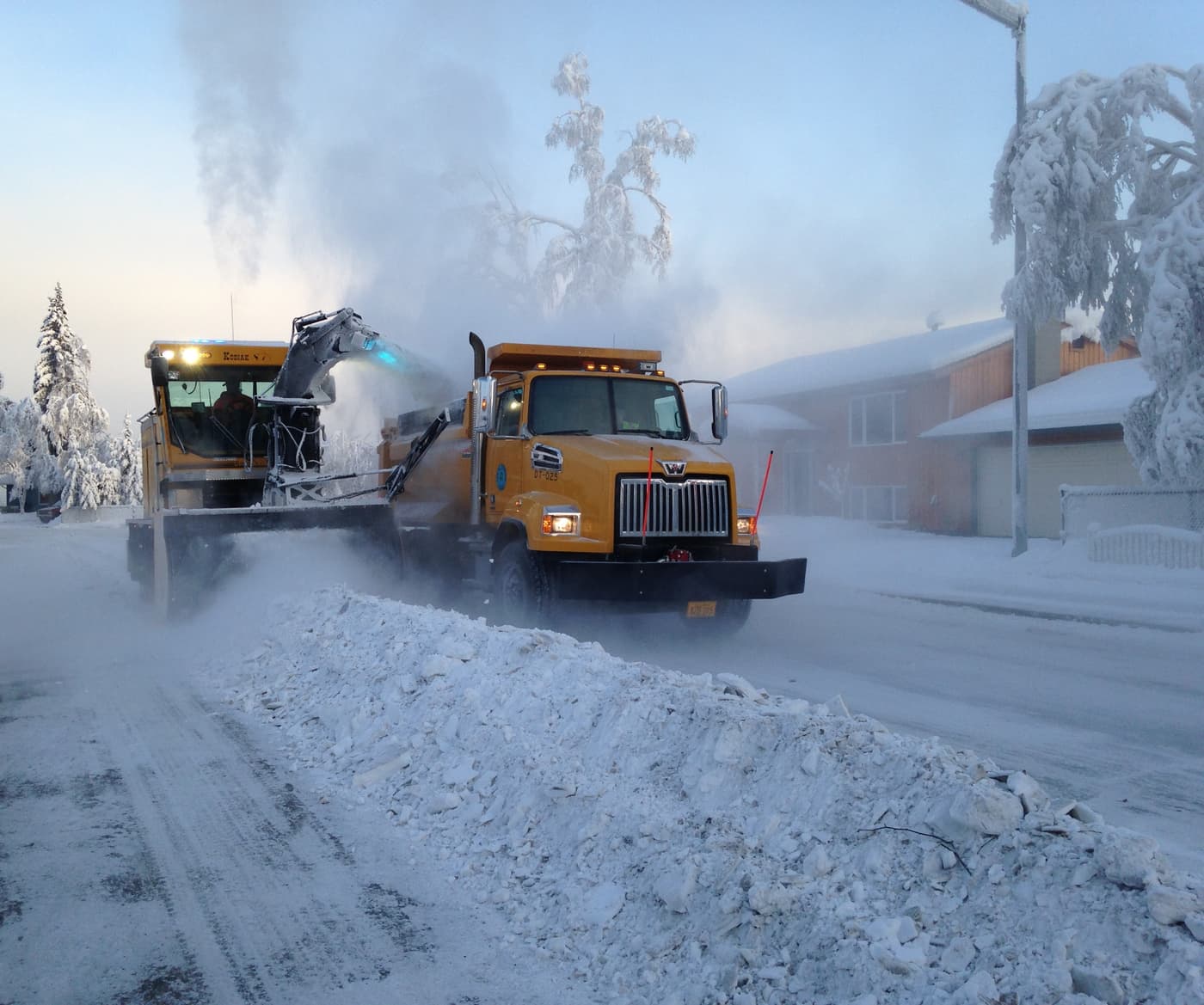
The City of Fairbanks Public Works Department works diligently to keep our roads clear and safe during the winter months. Our snow removal schedule is carefully planned but remains highly dependent on weather conditions, equipment availability, and staffing levels. Because of this, the schedule may change with little notice to ensure we respond appropriately to rapidly shifting winter conditions.
We prioritize main roads, emergency routes, school zones, and key public areas first to ensure essential services—such as police, fire, medical response and school transportation—can continue uninterrupted. Once these high-priority areas are cleared and safe, our crews move into residential neighborhoods following the established rotational schedule.
In some cases, heavy snowfall, ice events, blowing snow, or unusual weather patterns may require crews to revisit priority routes before progressing into neighborhoods. We appreciate your patience, cooperation, and understanding. Your assistance—such as moving vehicles during posted no-parking times, keeping garbage bins accessible, and avoiding pushing snow into the roadway—helps our teams work more efficiently and keeps Fairbanks safer for everyone.
Snow Removal Expectations & Resident Responsibilities
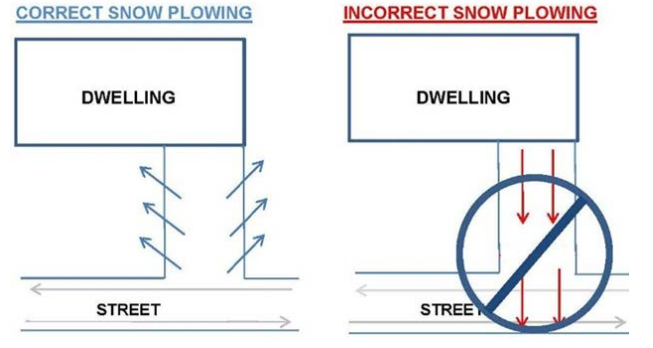
City code does not allow snow or hard pack from private property to be pushed onto sidewalks, right-of-ways or streets and requires sidewalks to be cleared of snow and ice by adjacent property owners. Only snow from sidewalks can be pushed curbside where it then can be removed during snow removal operations. If driveways have not been shoveled throughout the winter, there may be a significant drop off when hard pack is removed from the sidewalks and streets. This drop can damage vehicles, and we urge residents to taper the drop off before entering or exiting their driveways. It is property owner’s responsibility to maintain their driveways to avoid these drop offs during plowing or hard pack removal.
Orange signs and message boards will be placed in subdivisions to notify residents of upcoming schedules or any changes. When an area is posted, all vehicles and trailers must be removed from the roadway so crews can safely and effectively clear the snow. Items left in the right-of-way may be subject to towing.
The transfer of snow from private property or driveways into the street, City right-of-way, or drainage ditches is prohibited per FGC Sec. 70-161. Violations may result in a minimum $200 fee or the cost of removal for City staff and equipment. If you observe repeated violations or problematic snow disposal practices, we encourage you to submit a report through our Report a Problem link or call Public Works directly so we can address the issue promptly.
We respectfully request the public’s cooperation in assisting our crews to do the best possible job clearing out streets in a timely manner.
Posting & Signage for Snow Removal
The City of Fairbanks Public Works Department posts neighborhoods with temporary “NO PARKING AFTER 7 AM” signs for two important reasons:
-
To create a safer work zone: Removing parked vehicles and trailers from the public right-of-way helps eliminate choke points and obstacles. This reduces the risk of damage to City equipment and minimizes the possibility of accidentally damaging residents’ property.
-
To improve the efficiency and quality of snow removal: When vehicles are moved off the street, Public Works can collect more snow and properly smooth the entire driving surface, resulting in safer and more accessible roads for everyone.
Public Works day shift will place "No Parking / Snow Removal" signs after 12:00 PM on the day prior to scheduled snow removal operations. The current snow removal schedule is posted on the Neighborhood Snow Rotational Schedule and is updated frequently as weather and conditions change. For Island Homes, Walden Estates, and Arctic Park, Public Works will place reader boards 24 hours in advance and signs at least 12 hours in advance to provide additional notice.
When posting a block, Public Works will place a minimum of four signs per block, along with an additional sign beside any vehicle that appears to be subject to towing. Vehicles identified as potential tows are typically those with multiple layers of accumulated snowfall, indicating they have not been moved for an extended period. For documentation, staff will take a photo of the posted block and a photo of each vehicle marked with an additional sign.
Signs will be removed once the grader operator is on-site and ready to begin removing hardpack. Residents must wait until snow removal operations are fully completed before returning vehicles to streets that were posted for snow removal that day. Hardpack removal can take several hours and may require graders to create multiple berms to complete the work safely and effectively.
Plowing vs. Snow Removal (Hauling)
Plowing and snow removal are two different operations. Plowing pushes snow to the sides of the roadway to keep streets passable and maintain safe driving conditions. Snow removal (hauling) is a separate process where crews physically load the accumulated snow berms into trucks and haul them to disposal sites. Hauling is a longer, more involved operation.
Sidewalk Maintenance Responsibilities
The City of Fairbanks is responsible for maintaining sidewalks in designated areas, such as along major routes, school walking corridors, and specific public facilities. In all other areas, property owners are responsible for clearing and maintaining the sidewalks adjacent to their property, per FGC Sec. 70-161. This includes removing snow, ice, and hazards to ensure the walkway is safe for pedestrians. These responsibilities are guided by City ordinance to promote accessibility throughout the community.
Downtown Core & Special Areas
Snow removal operations in the Downtown Core and other designated special-use areas follow a different schedule than residential neighborhoods due to higher traffic volumes, limited parking, and the need to maintain accessible business and pedestrian spaces.
- Night Shift Snow Removal: To minimize disruptions to businesses, residents, and downtown visitors, Public Works performs most Downtown Core snow removal during the night shift. Crews typically operate between 9:00 PM and 7:30 AM, allowing equipment operators the space and visibility needed to safely plow and haul snow in tight urban areas. Night operations also help ensure that daytime parking, business access, and pedestrian routes remain available whenever possible.
- Parking Restrictions: Certain areas within the Downtown Core are subject to specific parking restrictions to support safe and effective snow removal. For example, no parking is permitted on Mondays from 1:00 AM to 6:00 AM in designated downtown zones. Additional temporary “No Parking” signs may be posted ahead of scheduled operations. Vehicles parked in violation of these restrictions may be subject to citation or towing to allow crews to clear snow and maintain roadway width.
Safe Practices During Snow Removal Operations
Snow removal operations involve large, powerful equipment working in challenging winter conditions. For your safety—and the safety of our crews—please follow these important guidelines:
- Stay Back from Equipment: Plow trucks, graders, loaders, and sidewalk machines require significant space to maneuver. Always maintain a safe distance behind and around snow removal equipment. These vehicles frequently stop, back up, and turn unexpectedly.
- Do Not Approach Operators: For everyone’s safety, please do not attempt to walk up to or flag down equipment operators while they are working. Operators must stay focused on the road and their surroundings, and unexpected interactions can create hazardous situations. If you need assistance, please contact Public Works directly rather than approaching machinery.
- Keep Children Away from Snow Berms: Snow berms created by plowing may look fun to climb, but they are extremely dangerous. Equipment operators cannot see children playing in or behind snow piles, and shifting snow can collapse unexpectedly. Please ensure children stay well clear of snowbanks and active snow removal areas.
- Use Caution When Passing Equipment: If you encounter graders, plow trucks, or loaders on the road, slow down and pass with extreme care. These machines are wide, may straddle the centerline, and often create flying snow and reduced visibility. Never pass on the right unless directed—it is the operator’s blind side.
- Operators Have Limited Visibility: Snow removal equipment has large blind spots, especially during storms or when operating near snowbanks. Even with mirrors and cameras, operators cannot see everything around them. Staying visible and keeping a safe distance helps ensure the safety of drivers, pedestrians, and equipment operators alike.
Supporting Documents
- City Map by Route 8.03 MB
- Emergency Plowing Routes 719.95 KB
- Emergency Sidewalk Plowing Routes 620.96 KB
- Nightshift Plowing Routes 590.49 KB
- Sidewalk Plowing Route Maps 4.91 MB
- Sidewalk Plowing Routes 627.61 KB